
A One Page Plan
Written by Mark Salter
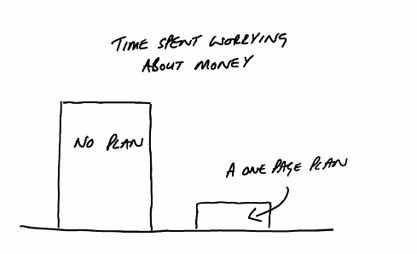
Financial planning doesn’t have to mean mountains of paperwork, complicated spreadsheets, or endless apps. In fact, one of the most effective ways to feel more organised and in control is to draw your entire financial plan on a single piece of paper.
The idea is simple: one page forces clarity. When space is limited, you focus on what really matters rather than getting lost in unnecessary detail. Start by dividing the page into four clear sections.
Where you are now.
List your key assets (such as savings, investments, pensions, and property) and your main liabilities (mortgage, loans, credit cards). This gives you an instant snapshot of your net position, without needing exact penny-perfect figures. It’s something you can now track – good or bad?
Cash flow
Note your household income and essential outgoings including debt repayments, followed by discretionary spending, holidays and regular savings. This section answers a crucial question: Where does money actually go each month and what is the cost of your lifestyle? Do you have surplus money for short or longer term savings, or is there a shortfall which you cover by dipping into savings or increasing your liabilities in box one.
Protection and resilience.
Write down what’s in place if things don’t go to plan: emergency savings, insurance policies, Wills, and Powers of Attorney. Then ask yourself, will you and your family be financially secure and able to cope if things don’t go to plan like being unable to work or you die prematurely. Seeing gaps in box 3 often prompts quick, practical action.
The future
This is where planning becomes motivating. Record your key goals, retirement, helping children, travel, reducing work hours and add some timeframes to work towards. You don’t need precise costs; direction is more important than detail.
The real power of a one-page plan is that it’s easy to revisit. Stick it in a drawer, pin it to a noticeboard, or review it every six months or annually. As life changes, the page evolves with you.
By fitting your finances onto one piece of paper, you replace complexity with confidence. You gain clarity, spot priorities quickly, and create a practical roadmap for the future, without feeling overwhelmed.